Choosing a factory is not about finding the cheapest supplier on page one. It’s about finding the right partner for my product, my market, and my growth stage.
A good custom pajama manufacturer should match my MOQ, fabric needs, quality level, communication style, and delivery expectations. If I want useful quotes and strong samples, I need to compare suppliers with a real checklist, ask better RFQ questions, and inspect samples the right way.
So in this guide, I’m going to keep it practical. No fluff. Just the things I would want on my desk if I were choosing between sleepwear manufacturers today.
What Does “Manufacturer” Really Mean in OEM Sleepwear?
When people say “manufacturer,” they often mean three different things at once: a real factory, a trading company, or a sourcing middleman. That’s where confusion starts.
In OEM sleepwear, a manufacturer usually means a factory that can produce garments based on my design, material, branding, and packaging requirements. But not every supplier who uses the word “manufacturer” is the actual factory.
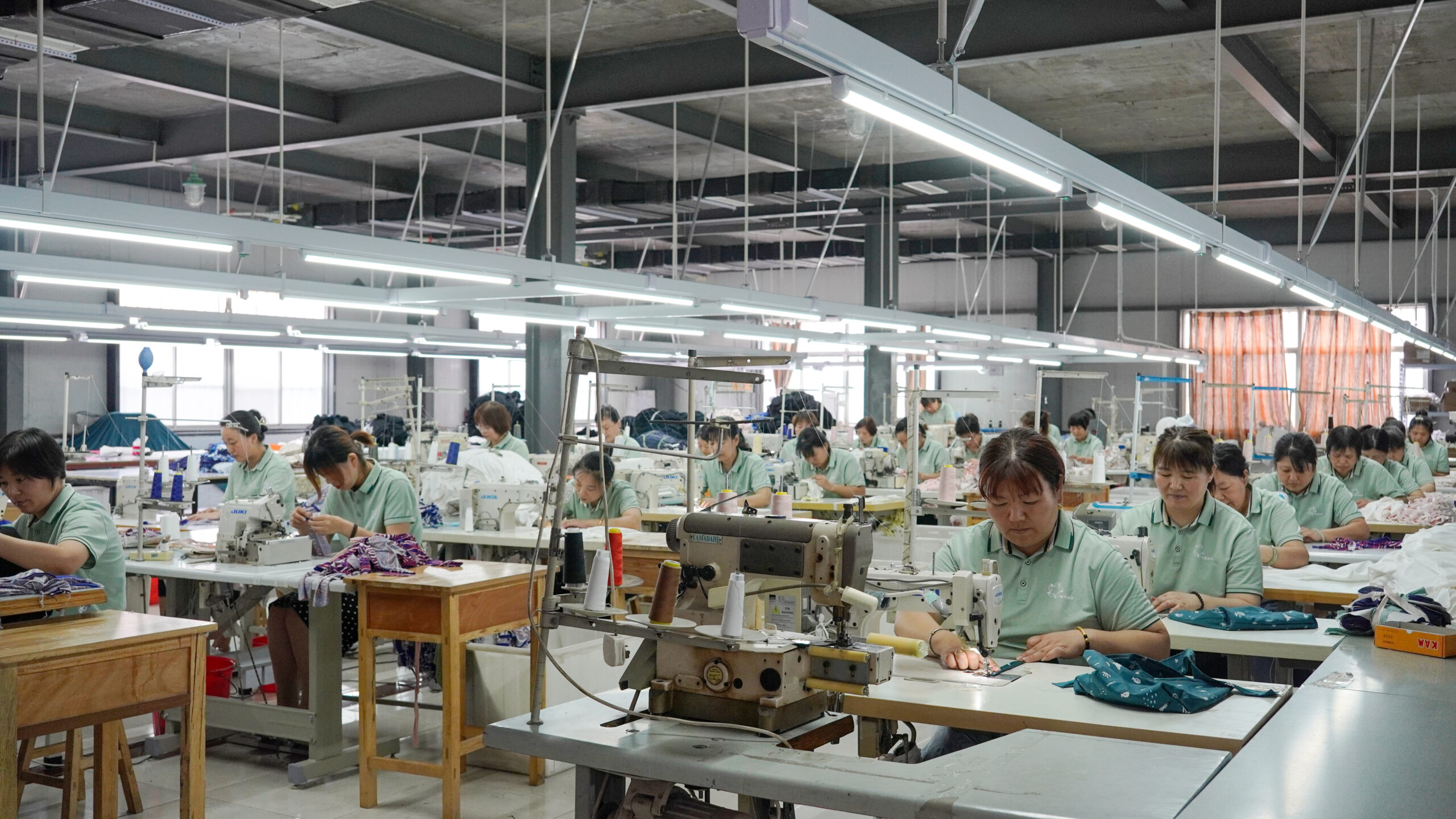
That difference matters more than many buyers expect.
If I’m working with a real factory, I usually have a better chance of discussing:
- production capacity
- sample lead time
- fabric sourcing
- quality control steps
- technical changes during development
If I’m working with a middleman, communication can still be okay, but the process often gets slower, less transparent, and harder to control. Small problems turn into long email chains. A sizing issue becomes “I’ll check with the factory.” A fabric question becomes “I’ll confirm and come back.” It sounds small, but when I’m trying to launch products on time, those delays stack up fast.
Here’s how I usually think about it:
| Supplier Type | Good For | Main Risk |
|---|---|---|
| Real factory | Better control, faster answers | May have MOQ limits |
| Trading company | Easier first contact | Less transparency |
| Sourcing agent | Helpful for beginners | Extra cost, slower chain |
That’s why I like to ask simple early questions such as:
- Do you own your production line?
- Can I see the sample room or workshop?
- Who handles QC before shipment?
- Can you share your main product categories?
- What is your normal MOQ per style per color?
Even the way they answer tells me something. A real factory usually sounds specific. A weak supplier sounds vague.
If I need a broader starting point, I usually compare their answers with my notes from how to start your own pajama brand, because that article helps me stay clear about the kind of partner I actually need.
Why this matters before I ask for a quote
A quote from the wrong supplier is not helpful. It may look attractive, but if the supplier cannot handle my materials, fit standards, or delivery needs, that price is just decoration. I would rather get three serious quotes than ten random ones.
And honestly, this one change saves a lot of time.
How Do I Define My Real Targets Before Sending RFQs?
This is the part people love to skip. I understand why. It feels easier to email ten factories and ask, “Can you make this?” But that usually creates messy replies, confusing prices, and bad comparisons.
Before I ask any factory for a quote, I need to define my real targets: MOQ, fabric, fit, price range, sample budget, testing needs, and lead time. If I do that first, supplier comparison becomes much easier and more accurate.
1. MOQ target
What is the lowest number I can realistically start with?
Do I need:
- 50 pcs per style per color?
- 100 pcs mixed sizes?
- one test order before scale?
If I’m still validating the market, low MOQ matters more than chasing the cheapest unit cost.
2. Fabric target
I need to decide whether I want:
- bamboo jersey
- cotton spandex
- modal
- terry
- fleece
- a certified sustainable option
This changes both price and supplier fit. A factory strong in cotton basics may not be strong in bamboo sleepwear. That’s why I always keep my sustainable fabrics guide close when I compare materials.
3. Fit and style target
Do I want:
- classic collared pajama sets
- relaxed loungewear
- maternity / nursing styles
- kids’ sets
- summer short sets
The more clearly I define the product type, the easier it is for the supplier to quote correctly.
4. Price band
I do not need the final perfect price on day one, but I should know my workable range:
- entry level
- mid-range
- premium
This helps me filter factories that are clearly too expensive or too basic for my market.
5. Lead time target
I ask myself:
- How fast do I need samples?
- When do I need bulk finished?
- Do I need room for revisions?
A supplier with strong quality but poor timing may still be the wrong choice for my season.
Here is the planning table I would use before sending RFQs:
| Item | My Target |
|---|---|
| Product type | Women’s long sleeve pajama set |
| MOQ | 50 pcs/style/color |
| Fabric | 95% bamboo 5% spandex |
| Price band | Mid-range |
| Sample lead time | 7–15 days |
| Bulk lead time | Within agreed season window |
| Market | US / EU / AU |
| Quality focus | Soft handfeel, stable sewing, colorfastness |
When I do this work first, I stop sounding like a vague buyer and start sounding like a serious brand. That changes the quality of supplier replies.
And if I’m already building a brand from scratch, this article naturally links back to how to start your own pajama brand step by step, because supplier selection only works when the product direction is already clear.
What Should Be on My 20-Point Supplier Evaluation Checklist?
This is where the real filtering happens. I don’t need twenty suppliers. I need two or three good ones. That’s a very different mindset.
A strong supplier evaluation checklist should cover certification, fabric capability, sampling, QC, communication, production capacity, and commercial terms. The goal is not to ask more questions. The goal is to ask the right questions before money and time are committed.
Below is the kind of checklist I would actually use:
Product & fabric capability
- Do they already make pajamas or sleepwear?
- Can they handle my target fabrics?
- Can they source bamboo, modal, cotton, or blends?
- Do they understand GSM and handfeel differences?
- Can they support custom prints, trims, labels, and packaging?
Sampling capability
- What is the sample lead time?
- What is the sample fee?
- How many sample revisions are realistic?
- Can they work from a tech pack?
- Can they suggest improvements if my pack is incomplete?
Quality control
- What QC steps do they use before shipment?
- How do they measure tolerance?
- Do they test shrinkage, colorfastness, and pilling?
- Can they share basic inspection photos or reports?
Communication
- Do they answer clearly and specifically?
- Do they reply in a reasonable time?
- Do they understand my product goals?
- Are they proactive when something is unclear?
Production & commercial fit
- Is the MOQ workable for my stage?
- Is the factory capacity suitable for future growth?
I don’t always ask all twenty questions in one email. That feels heavy. I usually spread them across:
- first inquiry
- follow-up reply
- sample stage
- final quote stage
Red flags I watch for early
There are a few warning signs that make me step back:
- answers that stay vague
- very low pricing with no detail
- refusal to discuss sample standards
- no clear explanation of MOQ
- no real understanding of sleepwear construction
- no willingness to discuss defects or tolerances
I also pay attention to tone. Good suppliers do not just say “yes, we can.” They explain how.
If I want a shortcut, I compare the supplier against actual product pages such as women’s pajamas, men’s pajamas, or maternity and nursing clothes. If their experience clearly matches my product line, that is a strong positive sign.
How Should I Inspect Pajama Samples Before Approval?
A sample can look nice in photos and still fail where it matters. This is one of those painful lessons many people learn too late.
When I inspect pajama samples, I should check shrinkage, pilling, colorfastness, stitching, fit balance, and size tolerance — not just appearance. A sample is not only for approval. It is also a warning system.
This is the stage where I slow down on purpose.
My practical sample acceptance checklist
Fabric checks
- Does the fabric match the promised composition?
- Does the handfeel match the target?
- Is the weight close to expected GSM?
- Does it feel breathable or too heavy?
- After washing, does it shrink too much?
Surface performance
- Does it pill quickly?
- Does the print crack or fade?
- Does dark dye transfer?
- Does color stay stable after washing?
Sewing & construction
- Are stitches straight?
- Are seams clean inside?
- Is collar / placket shape balanced?
- Are cuffs, hems, and pockets aligned?
- Are loose threads everywhere?
Measurement & fit
- Is size tolerance acceptable?
- Do sleeves and inseam match spec?
- Is the rise too short?
- Is the body width correct after wash?
- Does the set still fit the intended market shape?
Here’s the sample table I would use:
| Check Item | Pass / Fail | Notes |
|---|---|---|
| Fabric handfeel | ||
| GSM approx. | ||
| Shrinkage after wash | ||
| Colorfastness | ||
| Pilling risk | ||
| Stitching quality | ||
| Measurement tolerance | ||
| Fit comfort | ||
| Packaging sample |
I like using this kind of table because it stops vague feedback like “looks okay.” “Looks okay” is not useful when I’m about to place a bulk order.
The mistake I try not to make
I never approve a sample only because it photographs well. Pajamas live through washing, sleeping, stretching, and repeated wear. That’s the real test.
This is also a smart place to link readers toward a more detailed manufacturing article like custom pajama manufacturer guide, because once they reach sample stage, they are already moving closer to RFQ.
What Should I Put in My RFQ, Tech Pack, and Testing Request?
This is where I can save both sides a lot of time.
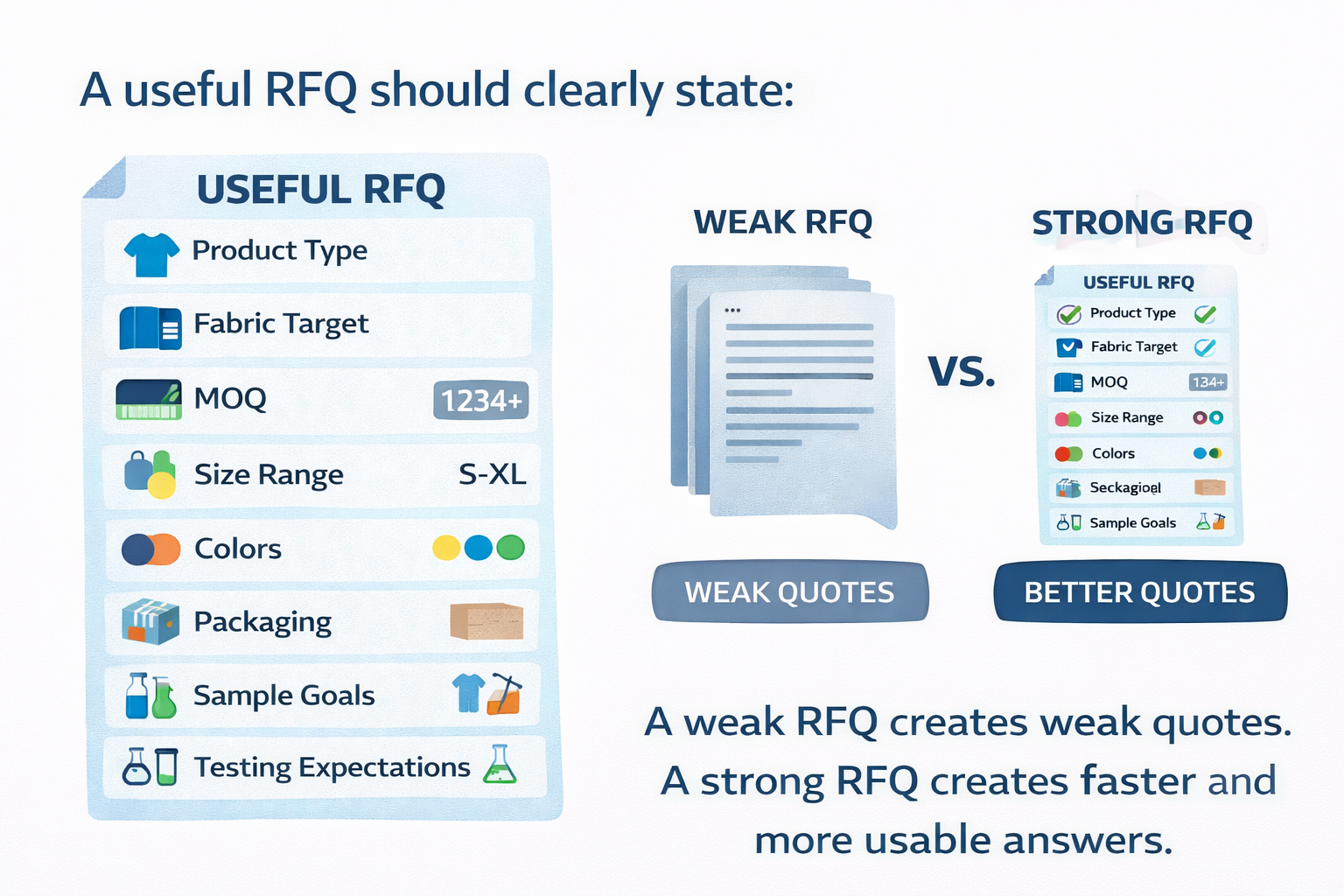
A useful RFQ should clearly state product type, fabric target, MOQ, size range, colors, packaging, sample goals, and testing expectations. A weak RFQ creates weak quotes. A strong RFQ creates faster and more usable answers.
I don’t believe an RFQ has to be fancy. It has to be clear.
My RFQ should include:
- product name
- product category
- target market
- fabric composition
- GSM target
- size range
- color / print idea
- MOQ expectation
- sample timeline
- target shipment timing
- logo / label / packaging needs
- testing requirements
- destination market
Simple RFQ template
You can literally start with this:
RFQ Template
- Product: Women’s long sleeve pajama set
- Fabric: 95% bamboo 5% spandex jersey, around 200–220 GSM
- Size range: S–XL
- Color / print: Solid dark green or custom print
- MOQ: 50 pcs per style per color
- Sample need: Yes, before bulk
- Packaging: Custom brand label + polybag or eco bag
- Testing focus: shrinkage, colorfastness, pilling, size tolerance
- Market: US / EU
- Timeline: sample in 7–15 days if possible
If I have a tech pack
Even better. Then I attach:
- flat sketch
- measurements
- construction notes
- trim details
- artwork
- label placement
- wash instructions
If I do not have a full tech pack
That’s okay too. I can still send:
- reference photos
- rough measurements
- target fabric info
- notes about fit and finish
The key is simple: the more clearly I ask, the more clearly I get quoted.
I also like to request testing requirements early if I care about export quality. That way the supplier knows I am paying attention.
And because the reader at this stage is very close to inquiry, this section is the perfect place to link to contact us for RFQ and sampling and private label pajama manufacturing.
What Replies Should Make Me Worry — and What Should I Do Next?
There are some replies that sound polite but tell me a lot more than they seem to.
Weak supplier replies often show up as vague answers, missing details, unrealistic promises, or no real response to sample and QC questions. These are often stronger warning signs than price alone.
I pay attention when I hear things like:
- “Everything is possible” with no detail
- “Best quality” with no QC explanation
- “Fast delivery” but no timeline range
- “Low MOQ” but no exact MOQ terms
- “Can do bamboo” but no evidence of past production
- “Price later” without asking enough product questions
Those replies tell me the conversation is still too shallow.
Better signs
What I really want to hear is:
- clear MOQ per style and color
- sample lead time range
- questions about my market and product use
- explanation of fabric options
- mention of size tolerance or inspection process
- interest in the tech pack or reference sample
That sounds simple, but it changes everything.
My next-step process
If a supplier looks promising, I move to:
- ask for a formal quote
- confirm sample cost
- share a clear RFQ or tech pack
- ask sample + bulk timeline
- confirm testing needs
- ask about labels and packaging
- request sample approval process
Then I stop comparing random vendors and start moving toward action.
Conclusion
Choosing a custom pajama manufacturer is not about collecting the most suppliers. It’s about finding the one that fits my product, my budget, my quality level, and my next stage of growth.
If I know my MOQ, fabric, fit target, and timeline before I send RFQs, I can compare factories much faster. If I use a real evaluation checklist, inspect samples carefully, and write clear inquiry notes, I stop wasting time and start getting usable quotes.