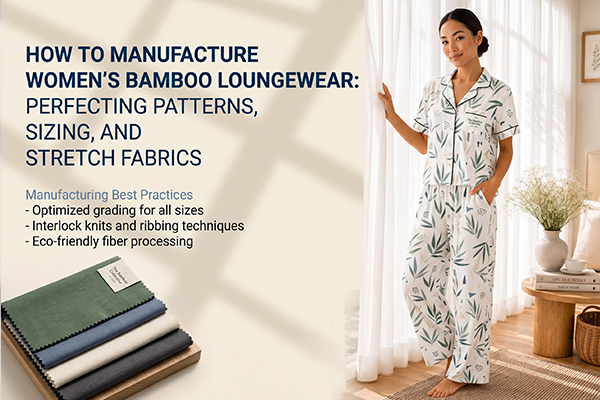
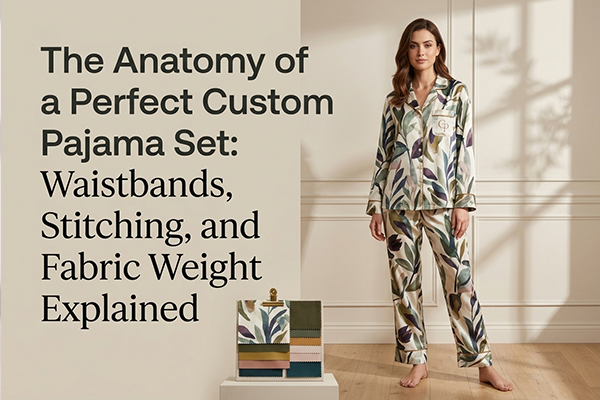
Loungewear has become an important category for sleepwear brands because customers now look for soft and comfortable products that can move from home to travel, casual outings, and daily routines. For many brands, this means loungewear is no longer separate from sleepwear development. It is now part of the same product planning process.
A custom loungewear manufacturer helps brands develop lounge sets through fabric sourcing, sample making, fit adjustment, custom colors, private labels, packaging, MOQ planning, and bulk production. The factory does more than sew garments. It helps turn a product idea into a production-ready collection that fits the brand’s price level, product direction, and launch plan.
Before developing a loungewear line, brands should understand the difference between pajamas and loungewear, and how fabric, fit, and branding details affect production. This makes it easier to choose the right first styles and control development cost.
What Does a Custom Loungewear Manufacturer Do for Brands?
A custom loungewear manufacturer supports much more than final production. In most projects, the factory becomes part of the development process from the first fabric decision to the final packing stage.
The first role is fabric sourcing. A manufacturer helps compare bamboo cotton, modal, organic cotton jersey, rib knit, French terry, fleece, linen blend, or satin-inspired fabrics based on hand feel, season, MOQ, and target price level.
The second role is pattern development and sample making. A lounge set may look simple, but the real product still needs correct proportions, fit balance, neckline shape, waistband structure, and pocket placement. If the brand wants unisex sizing, maternity-friendly ease, or wide-leg silhouettes, that work becomes more important.
A factory also helps with:
- fit adjustment
- custom colors
- custom printing or embroidery
- private label details
- packaging
- low MOQ production support
- bulk production and quality control
In practical terms, a manufacturer does not only make garments. It helps the brand move from concept to a production-ready product with fewer mistakes.
What Is the Difference Between Pajamas and Loungewear?
From a product development view, pajamas and loungewear are connected, but they are not exactly the same.
Pajamas are mainly designed for sleep and bedtime comfort. The fabric, silhouette, and details usually focus on softness, ease, and home use. A classic button-up pajama set is a clear example.
Loungewear is broader. It is designed for home, travel, casual daily wear, and relaxed styling. That means the product may need more structure, cleaner finishing, and a look that feels more presentable outside the bedroom.
This difference matters in development.
A pajama set may focus on:
- softer drape
- sleep comfort
- lighter trims
- bedtime positioning
A lounge set may focus more on:
- shape retention
- daily wear use
- stronger cuffs or waistbands
- cleaner outside appearance
Still, the two categories can overlap. Some button-up pajama sets can be developed with a more polished loungewear look. Some long sleeve lounge sets can work as pajama-inspired products.
Examples include:
- button-up pajama sets
- long sleeve lounge sets
- hoodie and jogger sets
- rib knit lounge sets
- wide-leg lounge pants
- shorts lounge sets
- linen or modal resort-style lounge sets
For sleepwear brands, pajama-inspired loungewear is often a smart way to expand beyond traditional sleep products without moving too far away from the brand’s core fabric and comfort focus.
Which Loungewear Styles Can Sleepwear Brands Develop?
Loungewear gives sleepwear brands more range than many buyers expect. A collection can start with one simple lounge set and later expand into a broader product line.
A common starting point is the long sleeve lounge set. This is useful for startup brands because it is practical, easy to understand, and works across many markets. It can be developed in bamboo cotton, modal, jersey, or French terry depending on the product direction.
Short sleeve lounge sets are also good for warm markets, travel collections, and lighter casual products. These work well when the brand wants a relaxed but simple first launch.
For more casual everyday positioning, hoodie and jogger sets are strong options. These are usually better for brands moving beyond traditional sleepwear and into daily comfort products.
Other useful directions include:
- wide-leg lounge pants sets
- rib knit lounge sets
- linen sleepwear and lounge sets
- modal or bamboo soft lounge sets
- satin-inspired lounge sets
- unisex lounge sets
- maternity-friendly lounge sets
For startup brands, simpler styles usually work better:
- one long sleeve set
- one shorts set
- one soft wide-leg set
For mature brands, the collection can expand into:
- hoodie and jogger combinations
- resort-style linen lounge sets
- seasonal capsule lounge products
- matching sleepwear and lounge programs
If you are comparing options for a first or second collection, it helps to review custom loungewear sets, private label loungewear sets, or broader loungewear set development before locking the sample plan.
Which Fabrics Work Best for Private Label Lounge Sets?
Fabric choice is one of the biggest decisions in loungewear development because it changes hand feel, stretch, warmth, price level, and final product positioning.
Bamboo cotton is a strong option for soft premium lounge sets. It usually gives a smoother feel than basic cotton and works well for relaxed tops, pants, and sleepwear-loungewear crossover products.
Modal or TENCEL modal is useful for premium lounge sets where the brand wants softer drape and a cleaner look. It often works well in women’s long sleeve sets, wide-leg lounge pants, and softer travel collections.
Organic cotton jersey is practical for brands that want a natural story and familiar product feel. It may not drape like modal, but it works well for easier lounge basics.
Rib knit is useful when the collection needs more stretch, texture, and closer fit. It often works well in minimal lounge sets or fitted soft basics.
French terry is a strong option for casual daily lounge sets. It gives more structure than lightweight jersey and usually feels more suitable for daily use rather than only sleep use.
Lightweight fleece is better for fall/winter loungewear because it provides more warmth and a stronger comfort story.
Linen or linen-cotton blend works better for resort-style or travel-friendly collections. It creates a cleaner and more natural visual direction.
Satin or silky woven fabric can support a smoother premium lounge look, especially when the product sits between sleepwear and elevated at-home wear.
Here is a simple development view:
- Bamboo cotton or modal: soft premium lounge sets
- French terry: casual daily lounge sets
- Rib knit: fitted or minimal lounge sets
- Linen: resort-style or travel collections
- Lightweight fleece: fall/winter loungewear
When comparing materials, it also helps to review custom sleepwear fabrics, sustainable pajama fabrics, and wider pajama fabric options before final fabric approval.
Season also matters. If the collection is being planned for colder months, it is useful to align fabric choice with Fall/Winter 2026 sleepwear trends and broader seasonal sleepwear development rather than choosing only by hand feel.
How Can Brands Start a Small Loungewear Collection With Low MOQ?
Low MOQ is one of the biggest advantages for startup brands because it reduces first-order risk. A new brand can test the market without putting too much budget into too many lounge sets at once.
At the same time, too many styles at the beginning usually increase cost and complexity. More fabrics, more colors, more trims, and more sizing combinations often make the first launch harder to manage.
A better way is to start with:
- 1–2 core styles
- one main fabric direction
- 2 colors instead of many
- a simpler label and packaging setup
One fabric across several colors usually makes development easier. One silhouette can also be tested across different markets. For example, a long sleeve lounge set can be offered first for women, then later adjusted into unisex or men’s sizing if the first run performs well.
Practical first-collection examples include:
- one bamboo cotton long sleeve lounge set in 2 colors
- one French terry hoodie and jogger set in 2 colors
- one linen lounge set for resort or travel positioning
- one modal wide-leg lounge set for premium women’s sleepwear brands
Low MOQ helps, but brands should still compare more than unit price. They should also understand how MOQ affects pajama production, low MOQ pajama production, and broader minimum order quantities in pajama manufacturing before making the first order plan.
If the collection also includes sleepwear branding, it can help to review how a private label pajamas manufacturer supports low MOQ private label production and broader private label sleepwear production.
What Private Label Details Should Brands Add to Loungewear Sets?
Private label details help a loungewear collection look like a real brand instead of a generic product line. But startup brands should still control how many custom details they add in the first production round.
Common private label options include:
- woven label
- printed neck label
- size label
- care label
- hang tag
- branded poly bag
- custom packaging
- logo embroidery
- custom buttons
- drawstring tips
- custom waistband label
- sleeve or hem logo placement
For many new brands, a simpler setup works better at the beginning:
- one neck label solution
- one care label format
- one hang tag
- one standard packaging direction
That is often enough to build a professional-looking launch without adding too much time or cost. More advanced details can be added later after the first collection has been tested.
What Should Brands Prepare Before Contacting a Loungewear Manufacturer?
A better quote usually starts with better input. If the brand sends clear development information, the factory can usually give a more useful quotation and sample plan.
A practical checklist includes:
- target market
- product type
- gender or size range
- reference images
- fabric preference
- GSM or fabric weight if known
- color plan
- logo or print artwork
- label and packaging requirements
- estimated order quantity
- launch season
- budget range if available
The clearer the information, the easier it is for the manufacturer to estimate:
- fabric direction
- MOQ level
- sample timing
- trim requirements
- production complexity
This also helps reduce unnecessary revisions later.
How Can a Custom Pajama Manufacturer Help Brands Expand Into Loungewear?
A custom pajama manufacturer is often a good partner for loungewear development because many of the core skills already overlap.
Pajama manufacturers usually already understand:
- soft fabrics
- comfort fit
- elastic waistbands
- relaxed silhouettes
- private label sleepwear
- soft knit product development
That means the move from pajama sets to lounge sets is often more natural than many brands expect.
A pajama-focused factory can also help connect both categories in one line. For example, a brand may start with a button-up sleepwear set, then extend the same fabric, color story, or label direction into lounge pants, soft long sleeve tops, or unisex lounge sets.
This is useful for brands that want matching sleepwear and loungewear products under one private label system.
In practice, that kind of support helps brands expand step by step instead of trying to build a full lounge collection all at once.
Conclusion
Custom loungewear is a strong opportunity for sleepwear brands because it connects home comfort, travel, daily wear, and private label branding in one category. A focused first collection, the right fabric, and a clear sample plan usually make development easier and reduce risk. Whether the brand starts with one bamboo cotton set, one French terry hoodie set, or one modal wide-leg lounge style, the key is to keep the first launch practical and production-ready. If you are ready to move forward, you can discuss your custom loungewear project, contact our team, or request a loungewear production quote.