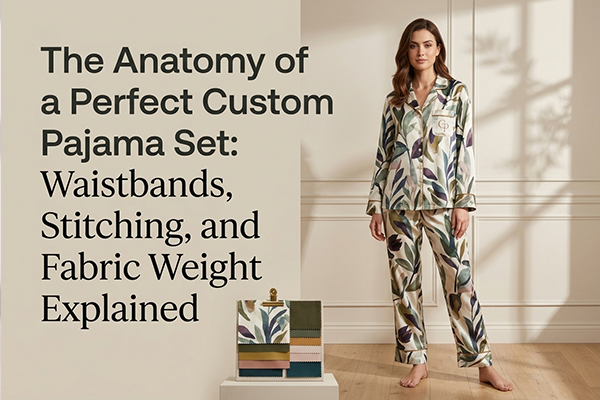
I know exactly how frustrating it is when a customer returns a pajama set because it is physically uncomfortable. You spend months picking the perfect colors, but if the garment irritates the skin, your brand takes the hit. At Taian Lianchuang Textile Co., Ltd, I see brand owners completely overlook the tiny product construction details that actually matter. Grab a coffee, and let’s talk about how to build clothes people actually want to sleep in.
To design a perfect custom pajama set, brand purchasers must prioritize physical construction details like stitched-in waistbands, flatlock seams, and appropriate fabric GSM. The most critical steps include anchoring the elastic directly into the waistband channel to prevent rolling, selecting a 160-220 GSM fabric weight based on the target season, and utilizing reactive dyes to prevent color fading. By specifying these exact product components in their Tech Packs, brands ensure their adult sleepwear is durable, supremely comfortable, and capable of generating repeat customers.
Making a pretty pajama set is easy. Making one that survives fifty trips through a washing machine requires absolute intention. Here are the exact product details you must specify to your factory before the fabric is ever cut.
Why Do Cheap Pajama Waistbands Always Twist and Roll?
We have all experienced this annoyance. You buy a comfortable pair of lounge pants, you wash them once, and suddenly the elastic band inside the waist is twisted like a pretzel. It ruins the garment, and it is the number one reason customers leave negative reviews.
Pajama waistbands twist and roll when factories leave the elastic floating loosely inside the fabric channel to save production time. To prevent this, brand purchasers must instruct their factory to use an anchor stitch—sewing the elastic directly into the fabric at multiple points. Specifying a stitched-in waistband in the Tech Pack guarantees that the loungewear retains its shape, structure, and comfort permanently, eliminating the most common customer complaint in the sleepwear industry.
I see this design flaw constantly, and it makes me genuinely frustrated because it is so easy to fix. When you order custom adult loungewear, the factory is looking for tiny ways to speed up their sewing line.
If you just hand them a picture of a pant, the sewing team will create a fabric tube at the waist, slide a piece of elastic through it, sew the ends together, and call it a day. The elastic is completely loose inside that tube. The moment your customer throws those pants into a hot washing machine, the elastic folds in half. It is incredibly uncomfortable against the stomach.
The Fix: Anchor Stitching
Let me tell you how we solve this at Taian Lianchuang Textile. We refuse to let elastic float. We use what is called an anchor stitch, or a multi-needle waistband finish.
We sew straight through the fabric and the elastic at the same time, permanently locking it into place. The elastic literally cannot roll. Yes, it takes the sewing operator a few extra seconds per garment. Yes, it requires a little more thread. But the result is a pair of lounge pants that feels solid and structured, wash after wash.
If you want to build a brand that people trust, you have to sweat these small details. When you are writing your custom pajama manufacturing instructions, boldly write: "Elastic MUST be anchored and stitched into the waistband channel." Your customers will notice the difference immediately.
How Does Fabric GSM Determine the Seasonality of Your Sleepwear?
You found an amazing fabric blend, but when the bulk order arrives, the pajamas feel way too heavy for a summer collection. Why did the factory use the wrong thickness? Because you didn’t give them a number.
Fabric GSM (Grams per Square Meter) determines the seasonality and drape of sleepwear, making it a critical metric for any custom apparel order. A lower GSM (140-160) creates a breathable, lightweight garment perfect for summer, while a higher GSM (200-240) provides the warmth and coziness required for winter collections. Brand purchasers must explicitly specify the exact GSM in their Tech Packs to prevent suppliers from substituting inappropriate fabric weights during bulk production.
Let’s have an honest conversation about fabric weight. If you walk into a factory and just say, "I want bamboo fabric," you are inviting a disaster.
I had a client named Sarah who made this exact mistake. She wanted to launch a breezy, lightweight summer lounge set. She told her previous supplier to use a bamboo blend, but she never mentioned GSM. The factory had a surplus of 250 GSM fabric lying around in their warehouse, so they used it to fulfill her order. The pajamas were incredibly thick and heavy. Her customers in Australia were sweating in them during December.
Understanding the Numbers
GSM stands for Grams per Square Meter. It is the literal weight and thickness of your fabric.
If you are designing for summer, you want a lower number. If you are designing for winter, you want a higher number. It really is that simple, but you have to write it down.
The Truth About Bamboo Stretch Fabric
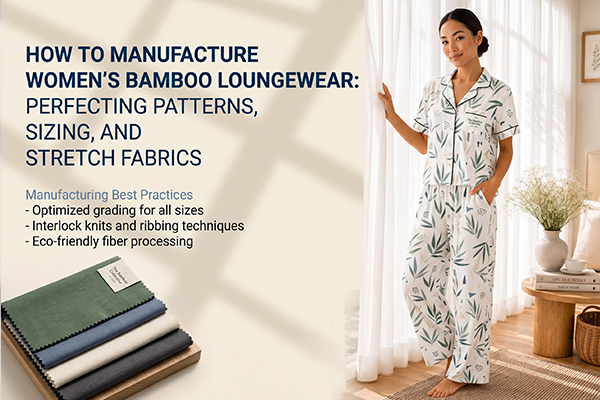
While we are talking about fabric, I have to clear up a massive lie that trips up so many brand owners. A lot of buyers ask for "100% bamboo" because they want that buttery soft, stretchy feel.
Here is the truth: bamboo fibers do not stretch on their own. If you want a comfortable, form-fitting adult lounge set that stretches and recovers perfectly, pure bamboo stretch jersey must be strictly 95% bamboo and 5% spandex.
| Target Season | Ideal Fabric GSM | Recommended Pajama Style |
|---|---|---|
| Spring / Summer | 140 GSM – 160 GSM | Short-sleeve sets, breathable loungewear. |
| Fall / Mild Winter | 180 GSM – 200 GSM | Long-sleeve sets, transitional sleepwear. |
| Deep Winter | 220 GSM – 250 GSM | Heavy thermal sets, cozy sweatpants. |
If a factory tells you their stretchy fabric is 100% bamboo, they are providing inaccurate information. You need the spandex for the fabric to bounce back into shape. By specifying both the correct GSM and the accurate 95/5 blend for your organic loungewear sets, you take total control over the physical feel of your product.
What Is the Difference Between Overlock and Flatlock Seams?
A customer tries on your beautiful pajama top, and immediately takes it off because the seams are scratching their ribs. The fabric is soft, but the stitching is awful.
The choice between overlock and flatlock seams dictates the physical comfort of a garment against the skin. Overlock seams leave a raised ridge of fabric on the inside of the garment, which can cause friction. Flatlock seams join two pieces of fabric edge-to-edge, creating a completely flat, smooth interior that prevents skin irritation. Brands prioritizing maximum comfort in adult sleepwear must specify flatlock stitching to guarantee a superior wearing experience.
I am obsessed with stitching because it is the most intimate part of the garment. It is the part that literally rubs against your customer’s skin for eight hours every single night.
Most cheap factories default to a standard overlock stitch (sometimes called a serged seam). It is fast, it is cheap, and it gets the job done. The problem is that an overlock seam leaves a bulky ridge of fabric on the inside of the shirt. If your customer shifts around in their bed, that bulky ridge causes friction. It itches. It annoys them.
Upgrading to Flatlock
If you want to build a truly comfortable adult pajama brand, you need to ask your factory about flatlock seams.
A flatlock machine is a specialized piece of equipment. It sews the two pieces of fabric side-by-side, perfectly flat. There is zero bulk on the inside of the garment. It feels like a second skin.
Yes, flatlock stitching is slightly more expensive because it requires more thread and a slower sewing process. But the perceived value of your garment skyrockets. When a buyer puts on a custom pajama top with flatlock seams, they immediately feel the difference, even if they don’t know the technical term for it. It just feels "right."
Do not let the factory choose the stitching method for you. You are the brand owner. You dictate the comfort.
How Can You Prevent Vibrant Pajama Prints from Fading in the Wash?
You spent weeks designing a gorgeous, vibrant print for your new loungewear collection. But after three washes, the colors look dull, cracked, and faded. Your beautiful art is ruined.
Pajama prints fade when factories use cheap pigment printing methods that simply lay ink on top of the fabric. To ensure vibrant, long-lasting colors, buyers must mandate reactive printing or digital reactive dyeing. These processes use heat and steam to bond the dye deeply into the actual fibers of the fabric. Specifying reactive printing guarantees that the custom loungewear remains soft to the touch and visually striking after dozens of wash cycles.
It breaks my heart when I see beautiful artwork destroyed by terrible manufacturing processes. You want your adult clothing line to stand out. You create an amazing floral or geometric print. You approve the sample, and it looks incredible.
But two months later, your customers complain that the pajamas look ten years old after a single trip through the laundry.
Pigment vs. Reactive Printing
Why does this happen? It comes down to the chemistry of the ink. If a factory gives you an incredibly cheap quote for a printed pajama set, they are likely using pigment printing.
Pigment printing is basically like painting a wall. The ink just sits directly on top of the fabric. It makes the fabric feel stiff (what we call a "hard hand feel"), and because it sits on the surface, it cracks and washes away quickly.
At Taian Lianchuang Textile, we strongly advise our clients to use reactive printing, especially on natural fibers like organic cotton and bamboo blends. Reactive printing uses specialized dyes that actually react with the molecules of the fabric. We use steam to force the color deep inside the yarn itself.
The result? The print becomes part of the fabric. It will never crack. It will never feel stiff against the skin. And the color remains brilliant wash after wash. When you are sourcing premium fabric printing, always ask your factory: "Is this pigment or reactive?" If they hesitate, you know exactly what they were planning to do.
Conclusion
Building a successful loungewear brand isn’t just about pretty colors; it is about mastering the product details. By anchoring your waistbands, specifying exact GSM and flatlock seams, and demanding durable reactive prints, you create sleepwear that customers will love forever. Reach out to us, and let’s perfect your next design.