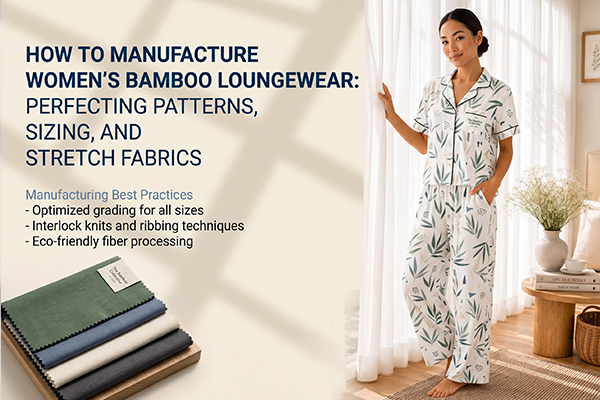
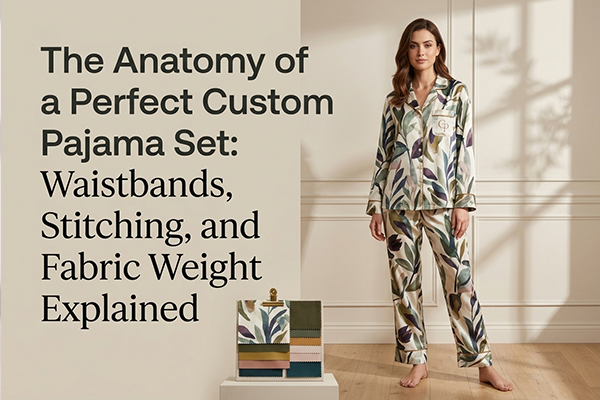
Bamboo pajamas are popular with sleepwear brands because they can support a soft hand feel, useful stretch, breathable comfort, and premium product positioning. However, a successful bamboo collection depends on more than choosing a fabric that feels soft. Brands should confirm the exact composition, GSM, shrinkage, pilling, MOQ, printing method, private label details, and production timeline before bulk manufacturing.
Before production, brands should ask a custom bamboo pajama manufacturer about the exact fabric composition, available GSM, hand feel, stretch recovery, shrinkage, pilling, colorfastness, and suitable print methods. They should also confirm the MOQ, sample process, revision rounds, private label options, packaging requirements, quality checks, and bulk production timeline. Clear answers to these questions help brands compare fabrics properly and reduce avoidable sample changes.
Bamboo pajama development is not only about selecting a soft fabric. The fabric, fit, print, labels, MOQ, and target market must work together. A good sample should confirm both the product appearance and its washing and production performance.
Why Are Bamboo Pajamas Popular for Sleepwear Brands?
Bamboo-based fabrics are commonly considered by brands developing soft pajama sets, maternity products, kids sleepwear, family collections, and relaxed loungewear. Their smooth surface and fluid feel can support a more premium product direction.
The main commercial value is often the hand feel. Bamboo viscose jersey can feel soft and smooth, while adding spandex can improve stretch and recovery. This makes it useful for products that need relaxed movement without becoming too loose.
Bamboo fabrics can work well for:
- women’s long sleeve pajama sets
- short sleeve and shorts sets
- maternity and nursing sleepwear
- matching family pajamas
- kids sleepwear
- soft lounge sets
- rib-knit sleepwear
- sleep rompers
For women’s products, bamboo jersey can support smooth drape and wide-leg silhouettes. For maternity styles, stretch and recovery may help the product adapt to a more flexible fit. For kids sleepwear, the fabric can provide a soft base when the garment structure, sizing, labeling, and market requirements are developed correctly.
Brands should avoid treating bamboo as an automatic sustainability claim. The exact fiber name, composition, documentation, processing route, and supplier information should be checked before making environmental statements.
From a private label perspective, bamboo pajamas are often positioned above basic cotton products because the fabric can provide a smoother and more distinctive hand feel. The final value still depends on stable fabric sourcing, fit, sewing quality, and wash performance.
What Bamboo Fabric Options Can Brands Choose?
The term “bamboo fabric” can describe several different compositions and knit structures. Brands should always ask for the exact fiber content rather than choosing material based only on a general fabric name.
Bamboo viscose with spandex
A common option is 95% bamboo viscose with 5% spandex. This combination usually provides a soft surface, good stretch, and comfortable recovery.
It is suitable for:
- fitted pajama sets
- women’s sleepwear
- maternity pajamas
- kids pajama sets
- soft loungewear
The fabric still needs testing for shrinkage, pilling, colorfastness, and recovery after washing.
Bamboo cotton blends
Bamboo cotton combines the smooth feel of bamboo-based viscose with some of the stability associated with cotton. A blend may be useful when the brand wants softness but also wants a more structured feel than pure bamboo-viscose jersey.
Common applications include:
- everyday pajama sets
- men’s sleepwear
- family pajama programs
- short sleeve sets
- lounge tops and pants
Bamboo modal blends
Bamboo viscose may also be combined with modal in certain custom fabric developments. This direction can create a smoother and more fluid fabric, but availability, MOQ, stability, and final labeling should be confirmed with the fabric supplier.
Bamboo rib knit
Bamboo rib has visible vertical texture and greater natural widthwise stretch than regular jersey. It works well for:
- fitted lounge tops
- maternity styles
- rib pajama sets
- close-fitting kids products
- premium sleep basics
The brand should confirm rib direction, recovery, spirality, and whether the texture stays stable after washing.
Bamboo jersey
Regular bamboo jersey is a flexible choice for long and short pajama sets. It usually gives a clean, smooth surface and is easier to use for all-over prints than heavier rib structures.
Bamboo cotton jersey
Bamboo cotton jersey can provide a balance of softness, stability, and everyday usability. It may be suitable for brands that want a softer product without using a fully bamboo-viscose composition.
Before choosing, brands should confirm:
- exact fiber composition
- GSM
- knit structure
- stretch and recovery
- surface hand feel
- fabric stability
- shrinkage
- pilling performance
- colorfastness
- stock or custom-developed status
Brands comparing bamboo with other materials can review bamboo vs modal vs cotton pajamas and broader pajama fabric options before confirming development.
What GSM and Fabric Weight Should Brands Confirm?
GSM means grams per square meter. It is one of the most useful specifications for comparing pajama fabrics because it affects thickness, hand feel, opacity, drape, warmth, and cost.
A lower GSM bamboo jersey may work for summer sets, short sleeve pajamas, nightgowns, or warmer markets. It can feel light and fluid, but the brand should check whether light colors become too transparent.
A medium-weight bamboo jersey can work for year-round pajama sets. It may provide better opacity and structure while keeping a soft surface.
Heavier bamboo blends or rib fabrics may be suitable for cooler seasons, maternity lounge products, fitted rib sets, or sleepwear-loungewear crossover styles.
The correct weight depends on:
- product type
- season
- climate
- target customer
- fabric composition
- desired drape
- opacity requirement
- price positioning
There is no universal best GSM. Two fabrics with the same weight can still feel different because of yarn type, knit density, finishing, and fiber blend.
Before bulk production, brands should use the actual sample fabric rather than approving only from a GSM number. Sample testing should include hand feel, opacity, stretch recovery, shrinkage, pilling, and fit after washing.
What Should Brands Check Before Custom Printing Bamboo Pajamas?
Printed bamboo pajamas can support family collections, kids ranges, seasonal launches, and private label women’s sleepwear. However, stretch fabrics need careful print testing.
All-over print
All-over printing covers the main fabric before garment cutting. It is useful for family pajamas, kids sets, and seasonal collections.
Brands should check:
- repeat size
- pattern direction
- color consistency
- print clarity
- placement across different garment sizes
Placement print
Placement prints are applied to a specific part of the garment, such as the chest, sleeve, pocket, or leg. They can reduce visual complexity but require accurate artwork position and size.
Digital printing
Digital printing can support detailed artwork and multiple colors. Suitability depends on the fabric composition, printing system, MOQ, and required wash performance.
Screen printing
Screen printing is useful for simpler logos or artwork. The print hand feel should be reviewed, especially when used on soft and stretchy pajama fabrics.
Reactive printing
Reactive printing may be suitable for some cellulose-based fabrics, depending on the fabric composition and supplier capability. Brands should confirm the process, color result, MOQ, and wash testing with the manufacturer.
Before approval, brands should review:
- print hand feel
- colorfastness
- stretch performance
- artwork clarity
- repeat alignment
- lab dips or strike-offs
- shrinkage after printing
- shrinkage after washing
A stretched fabric can change the appearance of fine lines or small motifs. For this reason, the print should be tested on the actual production fabric rather than on an unrelated fabric swatch.
How Does MOQ Work for Custom Bamboo Pajamas?
The MOQ for custom bamboo pajamas depends on the fabric source, color, print, style, and private label details.
Stock fabric can sometimes support lower MOQ because the material is already available. A custom-dyed or custom-knitted bamboo fabric may require a larger quantity because the mill needs to prepare yarn, color, knitting, dyeing, and finishing.
Custom prints may also affect MOQ. A new all-over print can require additional fabric setup, strike-offs, and minimum printing quantities.
Startup brands can control risk by limiting:
- number of fabrics
- number of colors
- number of prints
- number of silhouettes
- number of special trims
A lower MOQ helps market testing, but the unit price is usually higher because development and setup costs are divided across fewer garments.
Practical first-collection ideas include:
- one women’s bamboo pajama set in two colors
- one bamboo kids pajama set with one print
- one bamboo lounge set for a private label brand
- one family print across selected adult and kids sizes
One fabric may also be used across several styles or colors. For example, the same bamboo jersey can support a women’s long sleeve set, a short set, and a maternity style if the fabric performance fits each product.
Brands can review minimum order quantities in pajama manufacturing to understand how fabric and customization affect low MOQ pajama production.
What Private Label Options Can Brands Add to Bamboo Pajamas?
Private label details turn a custom garment into a complete branded product.
Available options may include:
- woven labels
- printed neck labels
- size labels
- care labels
- hang tags
- branded poly bags
- custom packaging
- custom buttons
- logo embroidery
- custom print placement
- drawstrings
- branded trims
For very soft bamboo garments, printed neck labels may be considered when the brand wants to avoid a separate neck label. However, wash durability and print clarity should still be tested.
Care labels should show the correct fiber content and care instructions for the actual material. Brands should not use a general “bamboo” statement without confirming how the fiber should be legally described in the target market.
A private label pajamas manufacturer can help coordinate labels, trims, packaging, and private label bamboo pajamas.
Startup brands should keep the first setup focused. One label system, one hang tag, and one packaging format are often enough for an initial collection.
What Quality Checks Matter for Bamboo Pajama Production?
Bamboo pajama quality depends on both the fabric and the manufacturing process. A soft fabric cannot correct poor sewing, unstable sizing, or weak printing.
Important checks include:
- fabric hand feel
- shrinkage
- pilling
- colorfastness
- stretch recovery
- sewing quality
- measurement tolerance
- waistband comfort
- cuff comfort
- print quality
- label placement
- final packaging
Shrinkage should be considered during pattern development. If the fabric changes after washing, the finished garment may no longer match the approved size chart.
Pilling should be checked because a soft surface can lose value quickly if it forms visible pills after limited wear or washing.
Stretch recovery is important for fitted pajamas, cuffs, waistbands, and rib styles. A fabric may stretch well but still perform poorly if it does not return close to its original shape.
Final inspection should compare the bulk product with the approved sample, size chart, color standard, labels, and packaging instructions.
What Should Brands Prepare Before Contacting a Bamboo Pajama Manufacturer?
Clear project information helps the manufacturer recommend more suitable fabrics, MOQ options, and sample plans.
If sustainability claims are part of the brand plan, buyers should also state what documentation they need. Examples may include fiber-content records, transaction documents, test reports, or certifications such as OEKO-TEX or FSC-related documentation where relevant and available.
These documents should not be assumed. Their scope, issuing body, validity, covered material, and relationship to the finished product should be checked before making claims.
A brand does not always need a complete tech pack for the first conversation. Reference photos, key measurements, fabric preferences, target quantity, and intended market can still help a custom manufacturer give useful early guidance.
How Can a Custom Bamboo Pajama Manufacturer Support Brand Development?
A custom bamboo pajama manufacturer can support the project from fabric sourcing to repeat production.
This may include:
- bamboo fabric sourcing
- composition suggestions
- GSM recommendations
- sample development
- pattern and fit adjustment
- print testing
- private label support
- packaging development
- low MOQ planning
- quality control
- long-term collection development
For example, Taian Lianchuang Textile Co., Ltd. supports OEM and private label sleepwear development using bamboo, bamboo cotton, modal, cotton, linen, rib, terry, fleece, and other fabrics. Depending on the project, support may include fabric sourcing, sample development, custom printing, labels, packaging, and small batch production.
The strongest first project is usually focused. One product, one main fabric, and a limited color or print plan make it easier to review hand feel, fit, washing performance, and customer response before expanding the line.
Conclusion
Bamboo pajamas can be a strong option for sleepwear brands, but successful production depends on clear fabric and development decisions. Brands should confirm composition, GSM, print method, MOQ, sample quality, shrinkage, pilling, private label details, documentation, and production timing before bulk manufacturing. A focused first style is usually easier to test and improve than a large collection with many fabrics and prints. To begin development, brands can discuss your bamboo pajama project, contact our team, or request a bamboo pajama production quote.