Choosing the right ladies pajama manufacturer matters because women’s sleepwear usually needs more attention to fabric, fit, trim details, and private label finishing. A good supplier does more than make garments. They help brands turn a product idea into a sample, improve fit, manage low MOQ production, and keep quality stable before bulk manufacturing.
Brands should look for a ladies pajama manufacturer with real sleepwear experience, fabric knowledge, strong sample support, clear MOQ terms, and private label capability. The right factory should help with fabric sourcing, fit adjustment, labels, packaging, production planning, and quality control. For women’s sleepwear, details like softness, drape, waistband comfort, sleeve shape, shrinkage control, and branding are all important.
Fabric, fit, MOQ, sample process, and private label details all affect the final product. If one part is weak, the whole collection usually feels weaker. That is why brands should review the full development process before placing an order.
What Does a Ladies Pajama Manufacturer Do for Sleepwear Brands?
A ladies pajama manufacturer is not only a sewing supplier. For most sleepwear brands, the factory becomes part of the product development process.
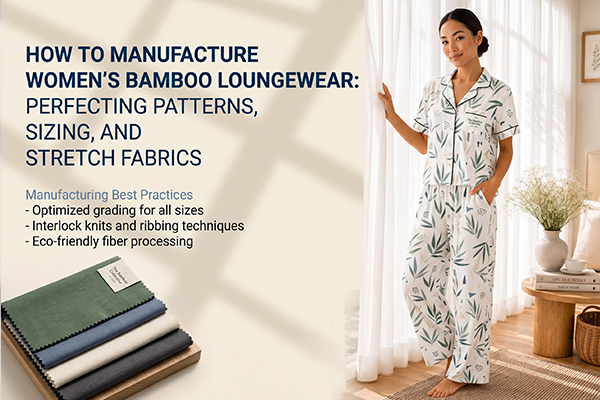
The first job is fabric sourcing. A good manufacturer should help the brand compare bamboo viscose, modal, organic cotton, poplin, rib knit, or French terry based on season, handfeel, and target price level. This step matters because women’s sleepwear often needs softer touch, better drape, and more stable fit after washing.
The second job is pattern making and sample development. Even when a brand already has reference images, the factory still needs to turn those ideas into workable garments. That includes neckline shape, sleeve length, shoulder balance, waistband construction, and overall fit.
After the first sample, the manufacturer should support fit adjustment. Many women’s pajama styles need changes after the first round. A top may look too boxy, the pants may feel too narrow, or the fabric may drape differently than expected. Sample revision helps fix those problems before bulk production.
A sleepwear manufacturer may also support:
- custom printing
- embroidery
- woven labels
- printed neck labels
- hang tags
- care labels
- custom packaging
Finally, the factory handles production and quality control. This includes cutting, sewing, checking measurements, inspecting trims, and preparing the goods for shipment. For women’s sleepwear, this part matters because soft fabrics can behave differently in production than they do in a small sample.
In simple terms, a ladies pajama manufacturer helps the brand move from concept to sample, then from sample to production with better control.
Which Ladies Pajama Styles Can Brands Develop?
Women’s sleepwear is a wide category, and that is one reason buyers need a manufacturer who already understands the segment.
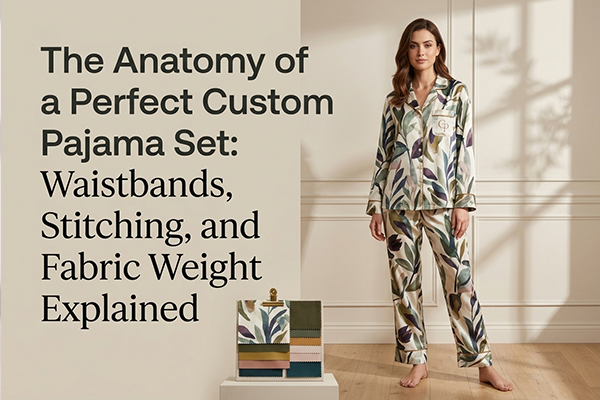
A very common style is the button-up pajama set. This is one of the most commercial options because it feels classic, giftable, and easy to position in a private label collection. It also works well with contrast piping, chest pockets, and custom labels.
Long sleeve pajama sets are also important. They fit many all-season and colder-weather collections, especially in bamboo, modal, or cotton jersey fabrics. These sets usually need careful fit balance because the sleeve shape, shoulder comfort, and drape all affect wearability.
For warmer markets, short sleeve and shorts sets stay important. These are useful for summer programs, resort collections, and startup brands that want a simpler first launch.
Some brands also develop camisole pajama sets. These can work well in modal, bamboo, or soft rib knits. They often need better control in neckline shape, strap width, and bust fit, so the sample stage matters more.
Another strong direction is wide-leg pajama pants sets. These create a more relaxed and modern look, especially when paired with smooth fabrics and soft drape. Wide-leg silhouettes are often used in both pajama and lounge-focused product lines.
For softer premium programs, many buyers choose bamboo or modal pajama sets. These fabrics often give a smoother surface and more elevated handfeel. On the more classic side, cotton poplin pajama sets are cleaner and more structured.
There is also growing interest in loungewear-inspired pajama sets. These styles can work for home comfort but still look presentable enough for casual wear. If that direction matches your brand, it helps to review some custom women’s pajamas and compare different ladies pajama styles before starting samples.
What Fabrics Are Suitable for Ladies Pajamas?
Fabric is one of the most important decisions in women’s sleepwear because it shapes comfort, drape, stretch, warmth, and product positioning.
Bamboo viscose is often chosen for premium softness and smooth handfeel. It usually feels cool against the skin and works well for long sleeve sets, short sets, and softer women’s styles.
Modal or TENCEL modal is also strong for premium sleepwear. It often gives a clean drape and silky touch. For brands that want elegant women’s sets, modal is a very useful option.
Organic cotton is more familiar and practical. It works well for brands that want a natural story, good breathability, and a stable fabric base.
Cotton poplin feels more crisp and structured. It is useful for classic button-up women’s pajama sets, especially when the brand wants a cleaner tailored look rather than a drapey knit feel.
Linen-cotton blends can work for lighter lounge or summer women’s sleepwear, especially if the brand wants a more natural and textured look.
Rib knit is useful when the style needs extra stretch or closer body fit. It can work well in camisole sets, maternity styles, or softer lounge products.
French terry is more useful when the collection moves toward lounge-inspired women’s pajamas. It gives more body and warmth than jersey, which helps with transitional or cooler-weather sets.
A simple comparison looks like this:
- Premium softness: bamboo viscose, modal
- Breathability: bamboo, organic cotton
- Better structure: cotton poplin, French terry
- More stretch and texture: rib knit
- Summer collections: bamboo, modal, cotton poplin, linen-cotton
- Cooler programs: French terry, rib knit, heavier jerseys
- Sustainable positioning: bamboo, organic cotton, some modal programs
For a broader review of materials, brands can compare sustainable pajama fabrics and other custom pajama fabric options before finalizing development.
How Should Brands Think About Fit and Size for Ladies Pajamas?
Fit is one of the biggest reasons a women’s sleepwear sample needs revision. A product may look correct in photos but still feel wrong on the body.
Many brands start with relaxed fit because it is easier to wear and easier to sell across different customer groups. It also works well for pajama sets, loungewear-inspired products, and soft modal or bamboo styles.
Some brands prefer oversized fit. This direction can work, but it needs control. If the shoulder drops too far or the sleeves become too wide, the set may feel sloppy instead of premium.
For bottoms, straight-leg pants stay useful because they are easy to size and easier to keep stable in production. Wide-leg pants create a softer and more modern look, but they need more attention to drape and inseam balance.
Elastic waistbands are standard, but their softness, width, and recovery matter more than many buyers expect. A waistband that twists or feels too firm can weaken the whole product.
Other important fit points include:
- shoulder comfort
- sleeve movement
- rise length
- pocket placement
- body length
- post-wash measurement stability
This is why size grading and sample fitting are so important. A factory should not only make the first sample; it should also help review where the fit needs correction before bulk production.
For women’s sleepwear, small fit adjustments often make a large difference. Better fit usually means better customer satisfaction and fewer problems after launch.
What MOQ and Sample Details Should Brands Ask About?
MOQ and sampling are practical issues, especially for startup brands and new private label programs.
A good manufacturer should explain whether they support low MOQ pajamas or small batch production for new sleepwear brands. In many cases, MOQ depends on the fabric, print method, and trim complexity.
For example:
- plain dye knit sets may allow lower MOQ
- custom print fabrics may require more quantity
- special trims or unique packaging may also raise the MOQ
That is why brands should always ask how the product setup changes the order requirement.
Sample details are just as important. Buyers should ask about:
- sample price range
- sample lead time
- revision rounds
- how sample fees are handled
- what happens if fabric needs to change
It also helps to ask whether the supplier supports minimum order quantities in pajama manufacturing and how low MOQ pajama production changes across fabric types.
Production lead time should also be discussed early. A low unit price is not always the best option if the sampling process is slow, the fit revisions take too long, or the factory cannot support the launch calendar.
That is why brands should not compare only by price. They should compare:
- MOQ
- sample time
- fabric support
- revision quality
- production schedule
- communication
What Private Label Options Can Be Added to Ladies Pajamas?
Private label details help turn a generic sleepwear set into a real branded product.
Common options include:
- woven labels
- printed neck labels
- size labels
- care labels
- hang tags
- custom packaging
- custom buttons
- custom prints
- embroidery
- logo placement
For classic button-up sets, custom buttons and contrast piping can change the product look quickly. For softer knit styles, printed neck labels and clean packaging may be enough for a simpler launch.
Many women’s sleepwear brands also use:
- logo embroidery on the pocket or chest
- custom polybags or eco bags
- brand story cards
- barcode stickers
- folded packaging layouts
A reliable factory should explain which private label options are realistic for the MOQ and product type. Not every first order needs all of them. Sometimes a cleaner and simpler setup works better for small batch production.
The key is to choose details that match the product level and the brand position.
How to Choose a Reliable Ladies Pajama Manufacturer?
Choosing the right supplier is about more than price or nice product photos.
A reliable ladies pajama manufacturer should show:
- real experience in sleepwear
- fabric knowledge
- custom sample support
- clear communication
- stable quality control
- certification support when needed
- real factory capability
- transparent timeline
A practical checklist looks like this:
- Do they really focus on women’s sleepwear or pajamas?
- Can they explain fabric differences clearly?
- Can they support sample revision and fit adjustment?
- Do they answer questions directly and clearly?
- Can they explain their quality control process?
- Can they support labeling and packaging for private label?
- Do they sound like a real factory partner, not just a sales contact?
- Are the sample and production timelines realistic?
If a brand needs a broader supplier review process, it helps to read how to choose a custom pajama manufacturer and compare what a reliable pajama manufacturer should be able to support before placing an order.
Conclusion
Brands should choose a ladies pajama manufacturer based on fabric knowledge, fit support, sample process, MOQ flexibility, private label options, and production control—not only price. A strong supplier helps at every stage, from material choice and sample revision to labels, packaging, and final production quality. If your team is planning a women’s sleepwear line and wants a factory partner that understands OEM development, low MOQ, and private label support, you can contact our team to discuss your ladies pajama project.